
by Pintler Insurance | Nov 13, 2025 | Safety Tips
The holiday season brings a surge of customers, and a fresh set of safety challenges, for small business owners. From bustling storefronts to festive decorations, the increased activity can lead to accidents if precautions aren’t taken. Whether you’re a seasonal pop-up or a year-round shop, now is the time to reinforce your safety protocols and ensure your team and customers can enjoy the season without incident.
- Keep Walkways Clear
High-traffic areas should be regularly inspected for hazards such as wet floors, cords, and clutter. Implement a routine to promptly address spills and obstructions. During snowy months, use wet floor signs and ensure proper cleaning procedures are followed to prevent slips and falls.
- Decorate Safely
Opt for UL-rated lights and avoid overloading electrical outlets. Keep cords away from doorways and ensure decorations don’t obstruct emergency exits or security systems. Additionally, ensure that your decorations don’t obstruct security systems.
- Train Your Staff
Ensure employees are familiar with basic emergency procedures, including the use of fire extinguishers and first aid kits. Regularly conduct safety drills to reinforce these protocols.
- Review Insurance Policies
Confirm that your business liability, property, and workers’ compensation coverage are current, especially if you’re hosting events or extending hours. Consult with your insurance agent to ensure adequate coverage for holiday-specific risks.
A safe business is a successful business. By proactively addressing potential hazards – from clear walkways to proper training and up-to-date insurance – you not only protect your staff and customers but also safeguard your reputation and bottom line. This holiday season, invest in safety measures that keep the festivities joyful and your operations running smoothly.
by Pintler Insurance | Jan 16, 2025 | Ideas, Safety Tips, Tips
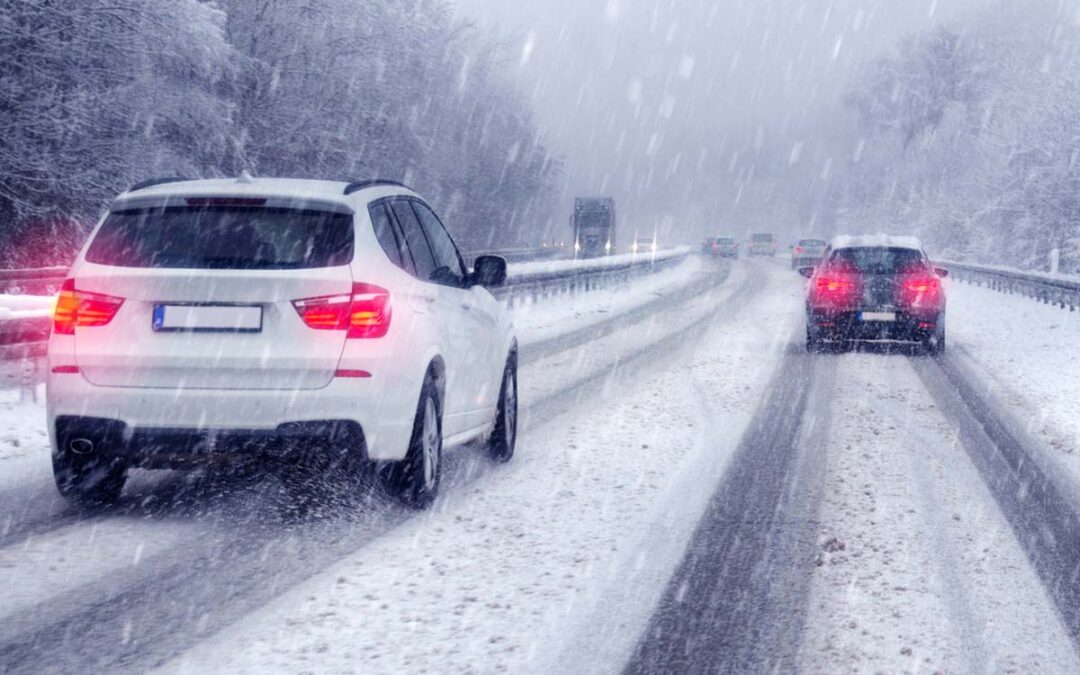
Icy weather can create challenging, and potentially dangerous, driving conditions in the winter months. Black ice forms on roadways and can produce a nearly invisible hazard. As temperatures approach freezing, icy conditions can develop, especially on roadways where elevation is higher, and bridges and overpasses. Adjusting your driving behavior for these conditions can help keep you, and others around you, safe on the road this winter.
Recognize Local Forecast
Changing winter weather can present hazards for drivers unaware of the local weather forecast. Knowing when ice may be present is an important first step. If you plan to drive in an area where snow or ice may be possible, check conditions in advance. You can sign up for weather alerts to receive text messages and optional alerts for your area. Just make sure not to use your smartphone while driving, as you will want your full concentration on the road.
Be Aware of Other Drivers
Even if you know the area and are familiar with driving on icy roads, other drivers may not be as experienced or aware of potential dangers. It’s important to increase your following distance to compensate for the increased stopping time it can take for you and other drivers to stop on slick surfaces. Be aware that larger vehicles, such as tractor-trailers, may require even longer to stop in adverse weather conditions.
Practice Caution in All Vehicle Types
While four-wheel drive, all-wheel drive, Electronic Stability Control, and other safety features can help you to drive more safely in the snow and ice, they may not be able to help drivers to safely drive at regular speed limits during snowy, slushy, or icy conditions. The National Safety Council recommends a three-second following distance during ideal road and weather conditions, and suggests slowing down and increasing following distances during adverse weather conditions or when visibility is reduced. Depending on your vehicle and where you live, you may want to consider whether snow tires are necessary in the winter months.
Expect Changing Road Conditions
Even the day after a storm, road conditions can remain challenging as road crews work to clear snow and ice. The roads may be clear in one area and icy in another due to elevation, road treatment and other factors. Freezing and melting precipitation can create new dangers overnight. As air temperatures rise above 32 degrees, roadways may retain pockets of ice that can be dangerous to drivers.
Know Where to Stop Safely
Deciding to stay home or to get off the roads when conditions turn icy can be a smart safety decision. Make sure that you choose a safe spot to wait for conditions to improve. Rest stops and parking lots are generally safer than the side of the road, where limited visibility may create hazards from snowplows and other traffic.
Encourage Safe Driving
If you have friends or family planning to travel during the winter months, offer them a chance to opt out of travel if conditions appear hazardous. For parents of newer drivers, consider creating rules about driving in snow and ice, and talk with your teens about the importance of changing their driving behavior during the winter months.
Icy conditions may present challenges for drivers, but there are steps that you can take to stay safer and to anticipate potential hazards. Know the local weather forecast, slow your speed, increase your following distance, allow yourself extra travel time and be prepared for unexpected icy conditions on the road. Just like other people’s driving, winter weather can be unpredictable.
But even the safest, most experienced drivers can get into an accident. That’s why it’s important to have the right insurance to protect you and your vehicle. Your road safety is very important to us. Call us or visit our website to discuss your auto insurance needs.
Source: https://www.travelers.com/resources/auto/safe-driving/how-to-drive-in-icy-conditions

by Pintler Insurance | Jul 22, 2024 | Ideas, Safety Tips, Tips
Summer is the perfect time to gather with friends and family for outdoor parties and celebrations. However, it’s important to prioritize safety alongside fun to ensure everyone has a great time. Here are some essential tips for hosting safe and enjoyable outdoor gatherings during the summer season:
1. Plan for Weather: Check the weather forecast before your party and plan accordingly. Make sure you have adequate shade, such as umbrellas or canopies, to protect your guests from the sun. If rain is in the forecast, have a backup plan for indoor space or provide rain gear.
2. Food Safety: Keep food safety in mind when preparing and serving food at your outdoor party. Store perishable food in a cooler with ice or ice packs to prevent spoilage. Avoid leaving food out too long, especially in hot weather, to prevent foodborne illnesses.
3. Stay Hydrated: Provide plenty of water and non-alcoholic beverages for your guests to stay hydrated, especially on hot days. Consider setting up a hydration station with water and other refreshing drinks to encourage everyone to drink enough fluids.
4. Check for Hazards: Before your party starts, thoroughly check your outdoor space for any potential hazards. Remove tripping hazards, such as toys, hoses, or cords, and ensure your outdoor area is well-lit to prevent accidents.
5. Pool Safety: If you have a pool at your party, take extra precautions to ensure everyone’s safety. Install barriers, such as fences or pool covers, to prevent accidental drowning. Assign a designated adult to supervise the pool at all times and have life-saving equipment, such as a life ring or shepherd’s hook, readily available.
6. Bug Protection: Provide insect repellent for your guests to protect against mosquitoes and other insects. Consider using citronella candles or torches to help keep bugs at bay. Provide screens or netting around food and seating areas to minimize bug intrusion.
7. Fire Safety: If you plan to have a bonfire or use a grill, ensure they are set up in a safe location away from flammable objects, and follow all fire safety guidelines. Keep a fire extinguisher nearby and designate a responsible person always to monitor the fire or grill.
8. Parking Considerations: Plan parking arrangements in advance to avoid parking-related issues. Ensure there is ample parking space and provide clear instructions to your guests on where to park to prevent any inconvenience.
9. Be Mindful of Noise: Consider your neighbors and be mindful of noise levels during your outdoor gathering. Keep music and other noises at a reasonable volume, especially in the evening, to avoid disturbing those around you.
10. Have a Plan for Emergencies: Be prepared for emergencies by having a first aid kit readily available and knowing the location of the nearest hospital or medical facility. Have emergency contact information easily accessible and designate someone to take charge in case of an emergency.
By following these safety tips, you can host a fun outdoor gathering while ensuring the well-being of your guests. Prioritizing safety will help you create lasting memories and a memorable summer party. Have a fantastic and safe summer celebration!
by Pintler Insurance | May 21, 2024 | Home Insurance, Tips
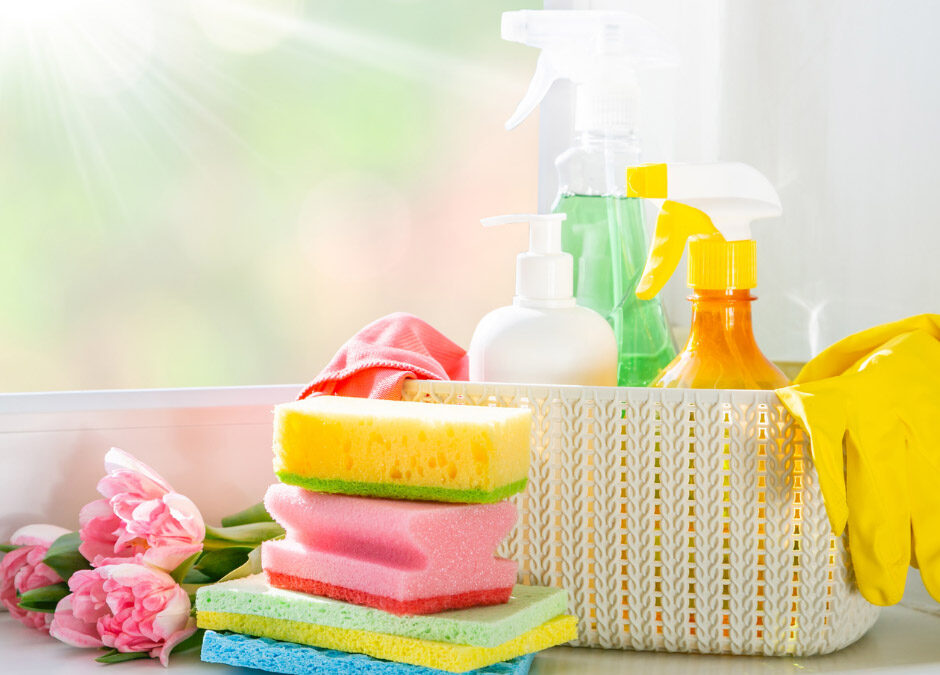
The flowers are blooming, the birds are serenading, and the house still feels like it’s stuck with the winter blues. Spring cleaning is a tradition that allows us to freshen up our homes and get a head start on the often-hectic seasons of spring and summer. It can feel like a daunting task, but it doesn’t have to be difficult. Here are six spring cleaning tips to get you started.
Clean Room by Room
Approaching your house room by room is the most effective way to deep clean it. Create cleaning checklists for each room to help you get organized and to remind you of the areas that need extra attention. Feel free to skip the areas that have been cleaned recently, and focus on the parts of your home that were largely neglected over the winter.
Organize and Clear the Clutter
One of the biggest parts of spring cleaning is often getting rid of clutter. A systematic four-step approach can be helpful for this. Identify problem areas, analyze reasons for the clutter, determine solutions, and implement them. Sorting your belongings into four categories—trash, give away, store, or put away—can also be effective as you go through the spring-cleaning process. Move the clutter out as soon as possible, whether it’s bringing a donation box to a charity or planning a yard sale.
Get the Household Involved
Make spring cleaning a household endeavor. Even young children can be excellent helpers. Assign age-appropriate chores, so everyone feels included. Try throwing on some music as you all clean or establishing a household reward as an incentive to get the work done.
Tackle the Seasonal Chores
Many chores need to be done seasonally, especially in preparation for warmer weather. So incorporate them into your spring-cleaning routine to get them out of the way early. For instance, tackle outdoor chores, such as cleaning the grill, patio, and outsides of windows, as soon as the weather warms up. Also, store winter clothing, bedding, decor, and other items. And pull out your spring items to give your home a refreshed look.
Keep Cleaning Products to a Minimum
If you need to shop for new cleaning products for spring cleaning, keep your items to a minimum. Myriad cleaning supplies can create unnecessary clutter, and you probably don’t need all of them to keep your home fresh and clean. Opt for a good all-purpose cleaner and microfiber cloths. Those items will cover the majority of surfaces in your home. Then, purchase other specialty cleaning supplies only as needed.
Establish New Cleaning Habits
A thorough spring cleaning that covers the whole house is a great opportunity to establish ongoing cleaning habits, which can make the next spring cleaning even easier. For instance, don’t try to do all of your spring cleaning in one day or even one weekend. Instead, tackle items on your spring cleaning to-do list for just 15 minutes each day. That will help to get you in the habit of tidying up for 10 to 15 minutes per day even after you’re done with your spring-cleaning tasks.
Freshen up your insurance policies this spring along with your home. Speak with one of our agents to update and make sure you have the right coverage for your needs. We are an independent insurance agent meaning we can provide coverage from many insurance carriers so you receive the home insurance for your budget and needs! You can reach us by phone or online.
Source: https://www.thespruce.com/spring-cleaning-a-complete-checklist-1900106

by Pintler Insurance | Dec 1, 2023 | Safety Tips, Tips
Strands of sparkling holiday lighting make your home feel merry and bright, especially on a gloomy December day. However, if installed incorrectly, they have the potential to damage your home or electrical system. Before you grab your ladder and boxes of lights, review our list of do’s and don’ts for hanging holiday lighting strands safely.
DO’s:
EXAMINE LIGHTS BEFORE HANGING – Return or throw away any holiday lighting sets with cracked or broken sockets, loose connections or frayed or bare wires. Replace burned-out bulbs promptly with bulbs of the same wattage. Hanging lights with damaged electrical wiring leads to a potentially flammable short.
USE VERIFIED LIGHTING AND APPROPRIATE OUTDOOR OUTLETS TO SUPPORT ELECTRICAL WIRING – Only use lights tested, rated and approved by Underwriters Laboratory (UL) or Intertek (ETL Semko) for outside use. These safety ratings should be clearly marked, both on the packaging and with labels attached to the electrical cords. Plug in all outdoor electrical decorations into a ground-fault circuit interrupter (GFCI). This safety outlet is designed to cut the power if electricity comes into contact with water, which is common outside.
CONSIDER USING LEDS OVER INCANDESCENT BULBS – LED lights are about 75 percent more efficient than conventional incandescent lights. This makes your electrical load more than seven times smaller. If you don’t have LED lights, consider the cooler-burning “mini” holiday lights instead of the traditional larger bulbs, which burn much hotter.
ASK FOR HELP – If installed incorrectly, holiday lighting can damage your home. Additionally, outdoor lights are often
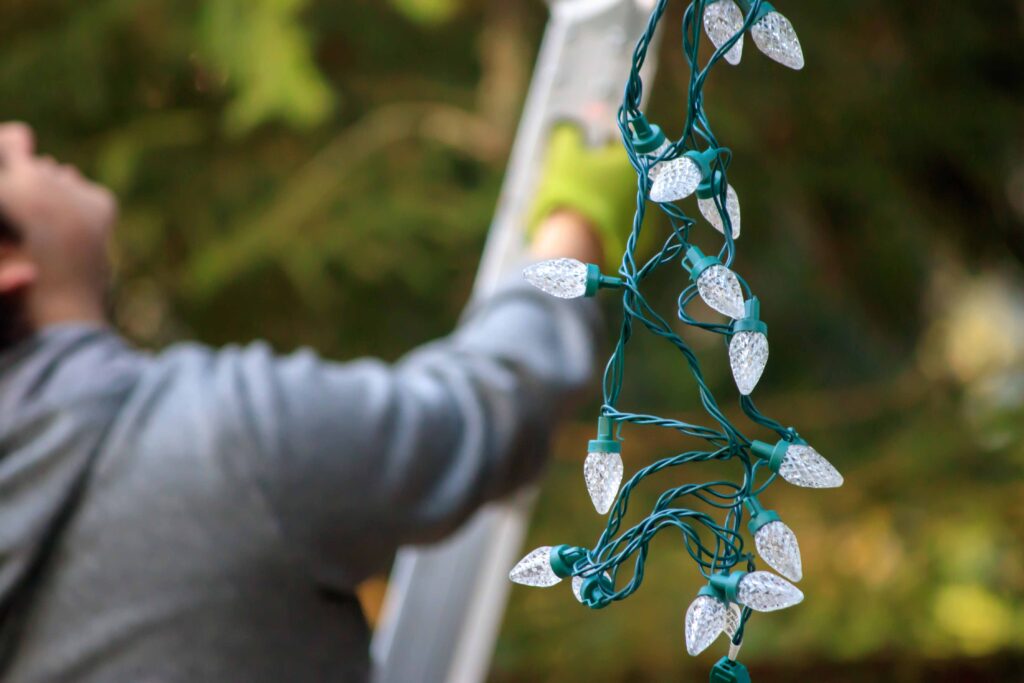
man in gray holding christmas lights climbs ladder
dangerous to install, especially if your roof has steep pitches or multiple levels. If you don’t feel comfortable, it is important to seek assistance. Find a friend to help you install your lights.
DON’Ts:
POWER TOO MANY LIGHTS WITH THE SAME OUTLET OR EXTENSION CORD – Each standard circuit breaker is able to handle about 15 amps of current. Light strings only draw a few milliamps individually. However, when you add too many strings together, it is easy to overdraw power. This has the potential to cause some serious damage to your electrical wiring. Plus, the more lights you connect end to end, the further the power must travel, leading to not-so-bright lights.
NEVER USE STAPLES, TACKS OR NAILS – THEY CAN DAMAGE YOUR ELECTRICAL WIRING – It’s fairly common for a string of holiday lights to have exposed electrical wiring in some areas. Unfortunately, if you use metal fasteners like staples, tacks or nails, it creates a circuit and generates heat that could set your home on fire. Additionally, if metal components come in contact with a live string of holiday lighting and then the current touches the metal components of your home, such as your gutters or downspouts, it creates an electrocution hazard. Always use insulated holders or plastic roof clips designed especially for hanging outside lights
CONNECT LEDS AND INCANDESCENT LIGHTS TOGETHER – Because incandescent light strings require a larger power current than LEDs, connecting them together one after the other causes the power drawn by the incandescent lights to overload — and then fry — the LED strings. It’s better to keep holiday lighting strands completely separate, running each out of a different outlet to avoid frying your electrical wiring.
Every year 150 home fires start with holiday lights and other decorative lighting. And another 260 home fires begin with Christmas trees. Follow these do’s and don’t to cut down on your chances of a home insurance claim. We want you to stay safe this holiday season. Call us or visit our website to discuss your home insurance needs. We can provide coverage from many insurance carriers so you receive the insurance for your budget and needs!
Source: https://apollohome.com/blog/christmas-light-safety/ and https://www.eversource.com/content/general/residential/safety/electric-safety/holiday-light-safety