
by Pintler Insurance | Jul 15, 2026 | Business, Home Insurance, Ideas, Safety Tips, Tips
So, you finally decided to pull the trigger on that home improvement project. Maybe the contractor is coming Monday to start the pool excavation, or perhaps you just spent three hours in the backyard assembling a trampoline while your kids swore—up and down—they’d “be super careful.”
We get it. Improving your home is exciting. But before the first nail is driven or the first splash is made, there is one quick task that needs to move to the top of your to-do list: Checking in with your local insurance agent.
Here is why those backyard upgrades and interior renovations change more than just your Saturday plans.
The “Hidden” Impact of Home Renovations
When you increase the value of your home, you change the math behind your coverage. If you spend $50,000 on a kitchen remodel but keep your old coverage limits, you are essentially leaving that new investment unprotected.
-
- Replacement Cost: If a disaster happens, your policy needs to reflect the current cost to rebuild your home with those high-end finishes.
- Liability Shifts: New features often mean new risks. A pool or a trampoline is a huge hit for the neighborhood kids, but it also increases the likelihood of an accident on your property.
- Safety Requirements: Most carriers have specific rules for “attractive nuisances” (like pools). You might need a fence of a certain height or a self-locking gate to remain compliant with your policy terms.
4 Upgrades That Require a Policy Review
| Feature |
Why it Matters |
| New Deck or Patio |
Increases the total square footage and replacement value of your dwelling. |
| Swimming Pools |
Significantly alters your liability risk and requires specific safety barriers. |
| Trampolines |
Some carriers have strict exclusions for trampolines; you need to know where you stand. |
| Major Interior Remodels |
Upgrading materials (granite vs. laminate) changes the “reconstruction cost.” |
Why Work With an Independent Agent?
Unlike a “big box” insurance company with a 1-800 number, an independent agent lives in your community. We understand local building costs and how specific upgrades affect your protection in this area.
We don’t just sell policies; we help you navigate the fine print so you aren’t surprised by a denied claim later. Whether it’s adding an umbrella policy for that new pool or adjusting your dwelling coverage for a finished basement, we do the shopping for you to find the right fit.
Let’s Update Your File
Before the kids start doing backflips or the deck furniture arrives, let’s make sure your coverage keeps up with your lifestyle.

by Pintler Insurance | Apr 27, 2026 | Home Insurance, Ideas, Safety Tips
When you are shopping for insurance, it is tempting to head straight for the “Sort by: Lowest Price” button. We get it—nobody wants to spend more on premiums than they must.
However, in the insurance world, price is rarely the best indicator of value. Two quotes can look nearly identical on paper, but they are often worlds apart in the protection they provide. Here is why choosing the lowest premium often leaves you vulnerable to massive financial exposure.
The Illusion of the “Identical” Quote
At first glance, two insurance documents might seem to offer the same thing: coverage for your car, your home, or your business. But the “fine print” is where the actual value lives.
When you see a significant price difference between two quotes, it isn’t usually because one company is just “nicer” than the other. It’s because the cheaper policy has likely stripped away your safety net to hit that lower price point.
Lower Liability Limits: The Danger of “Minimums”
Liability is the part of your policy that pays for damage you cause to others.
- The Trap: Cheap policies often carry “state minimum” or basic limits.
- The Reality: If you cause a $100,000 accident but only have $25,000 in liability coverage, you are personally responsible for the remaining $75,000. A slightly higher premium could increase those limits significantly, protecting your savings and future earnings.
Higher Deductibles: The “Pay Now or Pay Later” Trade-off
Lowering your monthly premium by raising your deductible feels like a win—until you must file a claim.
- The Trap: A $2,500 deductible makes your monthly bill look great.
- The Reality: Do you have $2,500 sitting in a liquid account ready to go tomorrow? If a disaster strikes and you can’t afford your deductible, your insurance policy is effectively useless because you can’t trigger the coverage.
More Gaps and Fewer Protections
Standard “budget” policies often exclude specific types of damage that the average person assumes are covered.
- Common Gaps: In homeowners insurance, this might mean no coverage for water backup or identity theft. In auto insurance, it might mean no rental car reimbursement or gap coverage for a new loan.
- The Result: You pay your premium every month, but when the “unexpected” happens, you find out it was an excluded peril.
Protecting Your “Total Financial Picture”
The goal of insurance isn’t just to have a piece of paper that says “insured.” The goal is indemnity—returning you to the financial position you were in before the loss.
Key Insight: A “little” extra premium—often the cost of a couple of pizzas a month—can be the difference between a minor inconvenience and a total financial catastrophe.
How to Shop Smarter:
- Compare “Apples to Apples”: Ensure you are looking at the same liability limits and deductibles across all quotes.
- Ask About Exclusions: Ask your agent, “What is NOT covered in this cheaper policy that IS covered in the more expensive one?”
- Focus on Out-of-Pocket Max: Don’t just look at the premium; look at what you would have to pay if the worst-case scenario happened today.
The Bottom Line
Insurance is a transfer of risk. When you pay a lower price, you aren’t “saving” money; you are simply retaining more of the risk yourself. Don’t wait for a claim to find out your coverage is hollow. Investing in a robust policy today is the only way to ensure your family, your assets, and your future stay protected.

by Pintler Insurance | Feb 27, 2026 | Home Insurance, Safety Tips
February is a tricky month for homeowners. Winter isn’t over, but temperatures often fluctuate enough to create new risks. A little proactive home maintenance now can help prevent costly insurance claims later.
Start with your gutters and downspouts. Ice buildup can cause blockages that force melting snow into unwanted areas, including under your roofline. Clearing debris reduces the risk of leaks and ice dams. While examining the roof, look for loose shingles or damage caused by earlier storms.
Inside the home, check for drafts around doors and windows. These small leaks not only increase heating bills but also raise the likelihood of frozen pipes. Pipes in unheated areas—such as garages, crawl spaces, and attics—should be insulated, and cabinet doors may need to stay slightly open during cold spells.
Next, test smoke and carbon monoxide detectors. Winter heating systems run constantly, increasing the risk of fire or carbon monoxide exposure. Replace batteries and confirm devices are functioning properly.
Basements also need attention. Moisture from melted snow can seep in through cracks or clogged exterior drains. Inspect sump pumps, foundation walls, and basement windows for early warning signs.
With a few preventive steps, homeowners can reduce the chance of winter-related damage and protect their property through the final stretch of the season.
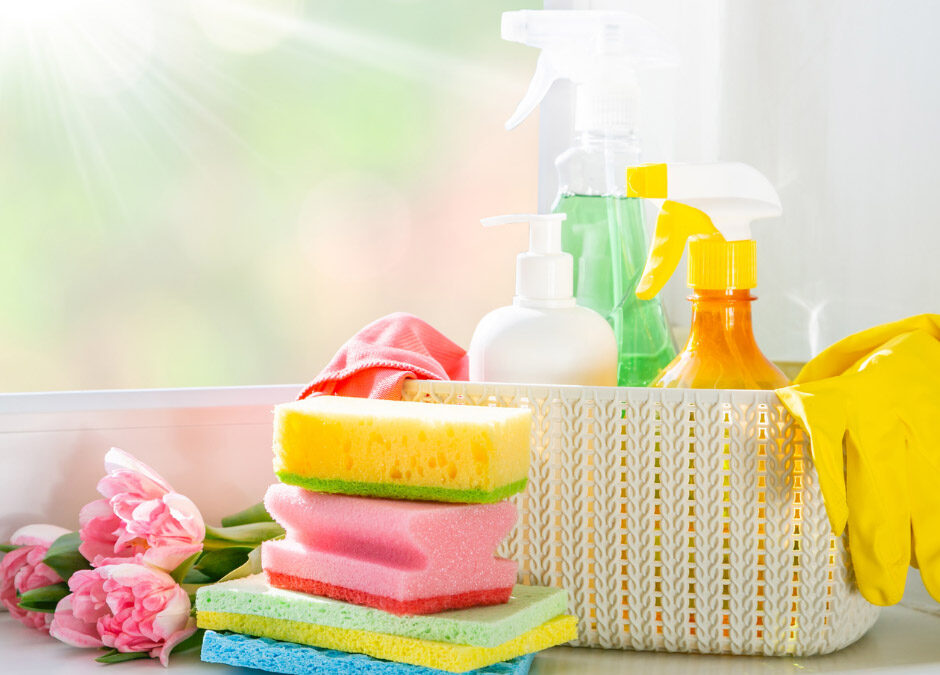
by Pintler Insurance | May 21, 2024 | Home Insurance, Tips
The flowers are blooming, the birds are serenading, and the house still feels like it’s stuck with the winter blues. Spring cleaning is a tradition that allows us to freshen up our homes and get a head start on the often-hectic seasons of spring and summer. It can feel like a daunting task, but it doesn’t have to be difficult. Here are six spring cleaning tips to get you started.
Clean Room by Room
Approaching your house room by room is the most effective way to deep clean it. Create cleaning checklists for each room to help you get organized and to remind you of the areas that need extra attention. Feel free to skip the areas that have been cleaned recently, and focus on the parts of your home that were largely neglected over the winter.
Organize and Clear the Clutter
One of the biggest parts of spring cleaning is often getting rid of clutter. A systematic four-step approach can be helpful for this. Identify problem areas, analyze reasons for the clutter, determine solutions, and implement them. Sorting your belongings into four categories—trash, give away, store, or put away—can also be effective as you go through the spring-cleaning process. Move the clutter out as soon as possible, whether it’s bringing a donation box to a charity or planning a yard sale.
Get the Household Involved
Make spring cleaning a household endeavor. Even young children can be excellent helpers. Assign age-appropriate chores, so everyone feels included. Try throwing on some music as you all clean or establishing a household reward as an incentive to get the work done.
Tackle the Seasonal Chores
Many chores need to be done seasonally, especially in preparation for warmer weather. So incorporate them into your spring-cleaning routine to get them out of the way early. For instance, tackle outdoor chores, such as cleaning the grill, patio, and outsides of windows, as soon as the weather warms up. Also, store winter clothing, bedding, decor, and other items. And pull out your spring items to give your home a refreshed look.
Keep Cleaning Products to a Minimum
If you need to shop for new cleaning products for spring cleaning, keep your items to a minimum. Myriad cleaning supplies can create unnecessary clutter, and you probably don’t need all of them to keep your home fresh and clean. Opt for a good all-purpose cleaner and microfiber cloths. Those items will cover the majority of surfaces in your home. Then, purchase other specialty cleaning supplies only as needed.
Establish New Cleaning Habits
A thorough spring cleaning that covers the whole house is a great opportunity to establish ongoing cleaning habits, which can make the next spring cleaning even easier. For instance, don’t try to do all of your spring cleaning in one day or even one weekend. Instead, tackle items on your spring cleaning to-do list for just 15 minutes each day. That will help to get you in the habit of tidying up for 10 to 15 minutes per day even after you’re done with your spring-cleaning tasks.
Freshen up your insurance policies this spring along with your home. Speak with one of our agents to update and make sure you have the right coverage for your needs. We are an independent insurance agent meaning we can provide coverage from many insurance carriers so you receive the home insurance for your budget and needs! You can reach us by phone or online.
Source: https://www.thespruce.com/spring-cleaning-a-complete-checklist-1900106
